
Table of Contents
AI is already everywhere in ecommerce.We use it to write product descriptions, create images, answer customer questions, recommend products and personalize shopping experiences.And the list keeps growing.
But now there is another question ecommerce businesses need to ask:
What does the new EU AI Act mean for my online store?
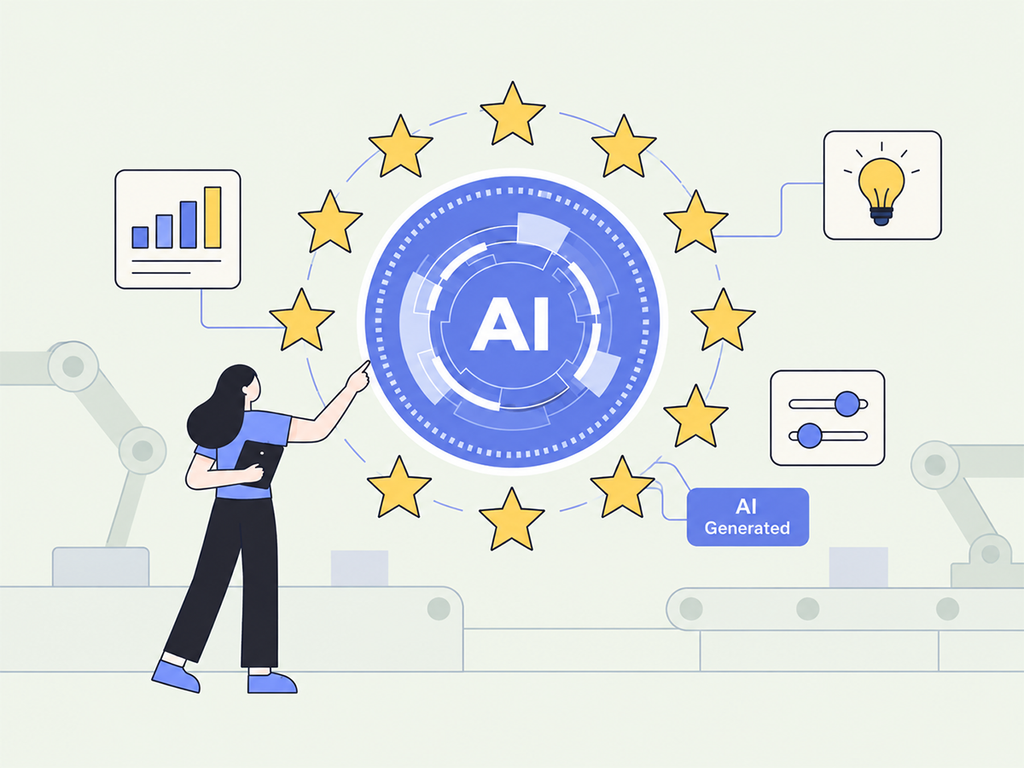
If you are using AI in your ecommerce business, you have probably already heard about the EU AI Act. But understanding what it actually means can be a little confusing.
Do you need to label AI-generated content?
Do customers need to know when they are talking to a chatbot?
Do AI product recommendations fall under the new rules?
And, perhaps the most important question:
What happens if you don’t comply?
Let’s take a look at what ecommerce businesses actually need to know.
1. The New EU AI Act: What ecommerce businesses need to know
The EU AI Act is the European Union’s framework for regulating artificial intelligence. But it is important to understand one thing from the beginning:
The EU AI Act does not treat every use of AI in the same way.
The rules are based on the level of risk associated with an AI system. Using AI to remove a background from a product photo is obviously very different from using AI to make decisions that could significantly affect a person.
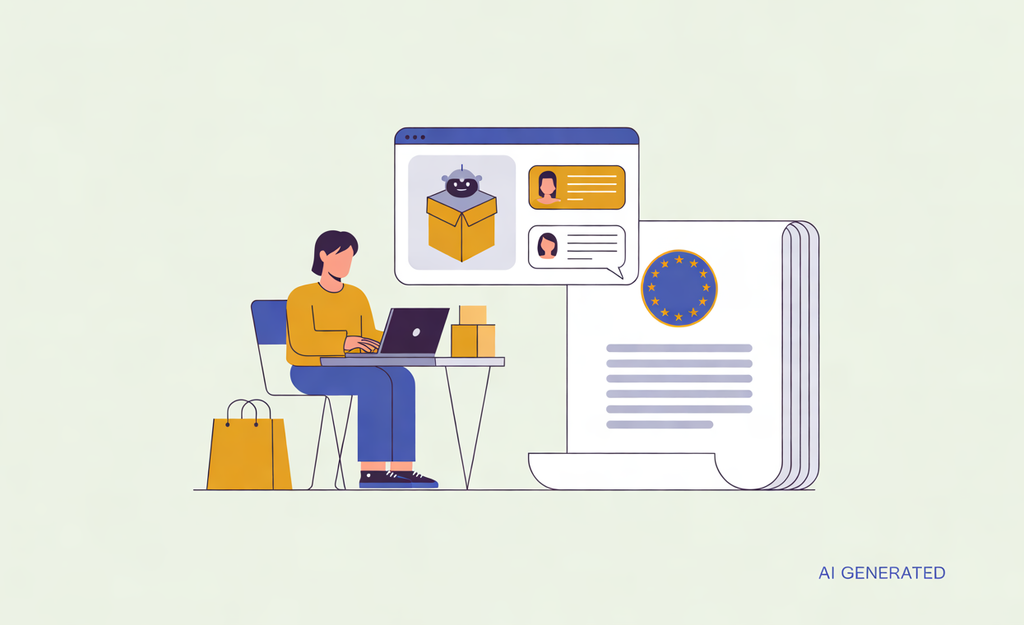
So if you run an online store and use ChatGPT, an AI image generator or an AI-powered search tool, this doesn’t automatically mean that your
business is using a “high-risk AI system.”
Instead, you need to look at what the AI actually does.The AI Act is being introduced gradually, and one of the dates ecommerce businesses should pay attention to is 2 August 2026, when the transparency obligations under Article 50 started to apply.
And this is where things become particularly interesting for ecommerce.
Because AI is no longer just working somewhere behind the scenes. Your customers can actually see it. They can talk to it. And they can see content created by it.
So let’s look at what this means in practice.
2. How the EU AI Act impacts your ecommerce store
Let’s say you have a typical ecommerce store. You use an AI chatbot for customer support. You generate some product descriptions with ChatGPT. Your marketing team uses AI to create lifestyle images Your product recommendation system uses AI to decide which products to show customers. Maybe your email platform uses AI to personalize campaigns.
Sounds familiar?
The first step is to make a list of all the AI tools you’re already using. And don’t forget about third-party apps. You may not have intentionally added “AI” to your ecommerce stack. An app you installed for search, recommendations, customer service or marketing may already use it.
For every tool, ask a few simple questions:
- What does this AI actually do?
- What data does it use?
- Does the customer interact with it?
- Does the customer see content generated by it?
- Does it make decisions about customers?
- Who is responsible for the tool?
This is probably a much better place to start than trying to understand the entire AI Act at once.
What about AI chatbots?
This is one of the easiest examples. If a customer opens your store and starts chatting with an AI assistant, they should generally know that they are interacting with AI. It doesn’t need to be complicated.
Something as simple as:
“Hi, I’m an AI assistant. How can I help you?”
can make the interaction clear from the beginning.
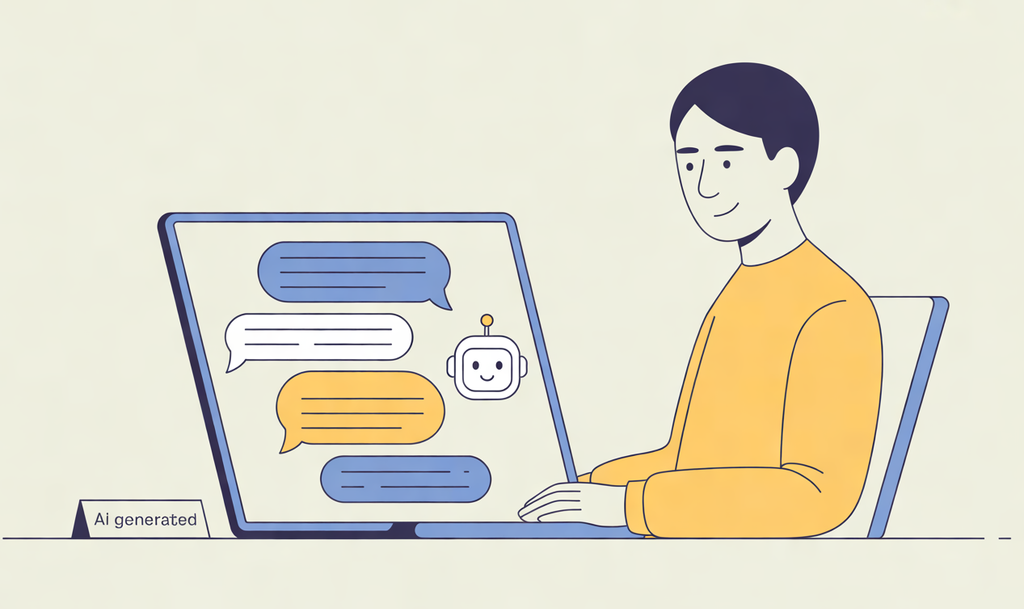
And honestly, this is not only about legislation. It’s also about trust. People don’t necessarily have a problem with talking to AI. They may have a problem with being made to believe they are talking to a real person when they aren’t.
What about AI-generated product descriptions?
This one is a little more complicated. If you use ChatGPT to help write a product description, does that mean you need to put an “AI-generated” label next to every product?
No. Not automatically.
The AI Act doesn’t simply say that every piece of text created with AI has to carry a visible AI label. The requirements depend on the type of AI system, the content and how it is used. This distinction is important because you will probably see a lot of simplified advice online saying:
“AI-generated content must be labelled.”
It’s not quite that simple.
And that brings us to the next question.
3. Check your AI Act obligations: EU AI Act compliance checker
This is where an AI Act compliance checker can be useful. Instead of trying to understand every article of the legislation, you can start with your own ecommerce store.
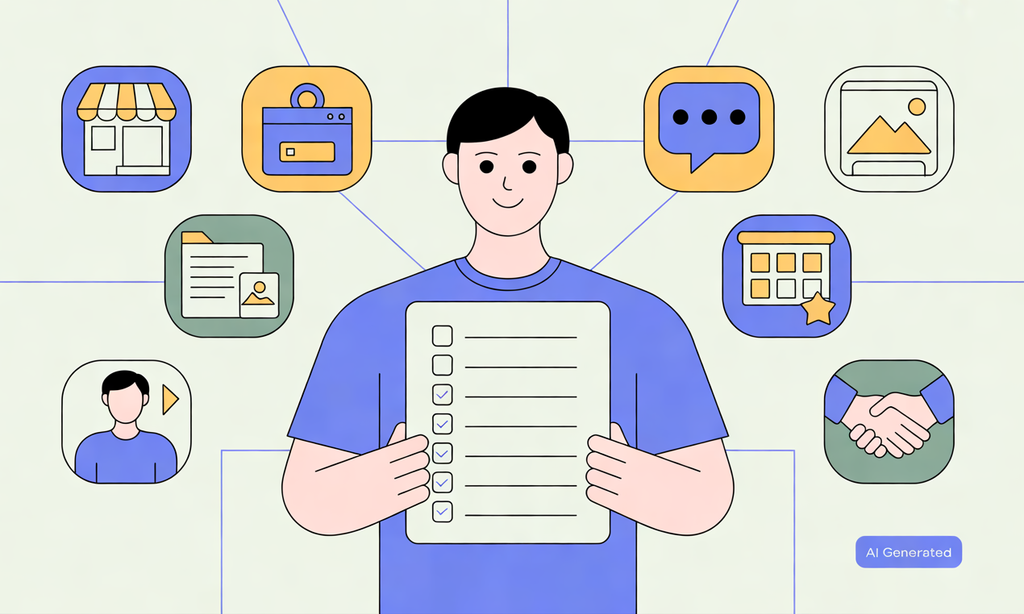
For example:
- Do you use AI in your store?
- What type of AI do you use?
- Does your customer interact directly with it?
- Does it generate text, images, audio or video?
- Is AI-generated content shown publicly?
- Do you use AI for recommendations or personalization?
- Does the AI make decisions about customers?
- Is the AI provided by a third-party service?
Based on the answers, you can identify which areas may need further attention.
Of course, a checker shouldn’t replace legal advice. Think of it as a first step – a way to understand where you should look more closely. Because the first problem for many ecommerce businesses isn’t necessarily non-compliance. It’s simply not knowing where AI is being used in the first place.
4. AI-generated content: What needs to be labelled?
And now we get to probably the most interesting part for ecommerce. AI can create almost anything today:
- Product images.
- Models.
- Videos.
- Descriptions.
- Blog posts.
- Social media content.
- Voiceovers.
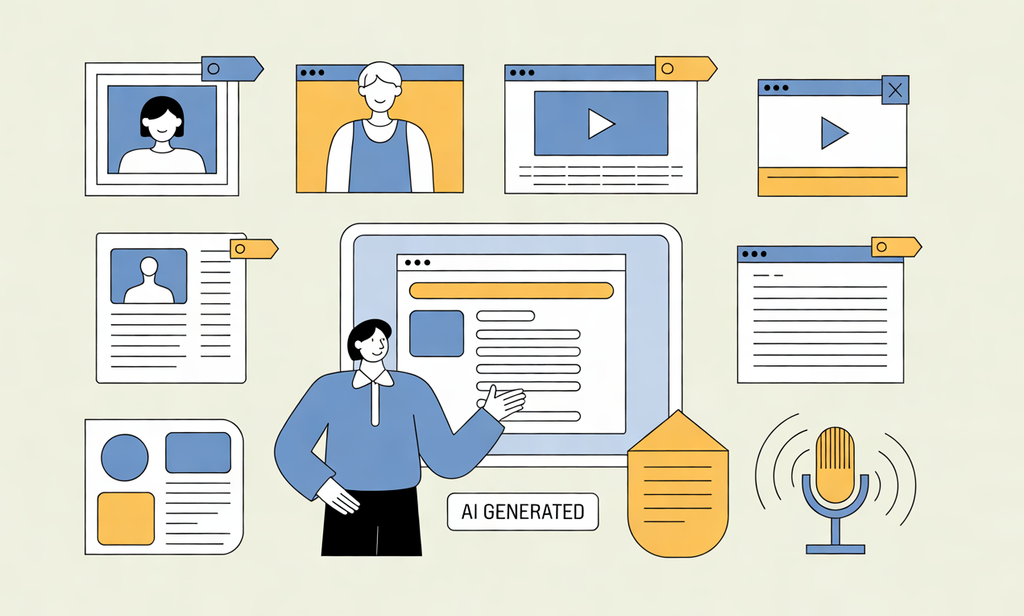
So when do you actually need to tell people that something was created or manipulated by AI? The answer is: It depends.
The AI Act contains specific transparency requirements for certain AI-generated and manipulated content. It doesn’t mean that every AI-assisted piece of ecommerce content suddenly needs a large “AI-generated” label.
Let’s break it down.
What AI-generated content needs to be marked?
The AI Act distinguishes between different types of AI-generated content and different responsibilities.
For certain generative AI systems, providers need to make AI-generated content detectable through machine-readable marking, where technically feasible.
There are also specific transparency requirements for deployers, including certain AI-generated or manipulated images, audio and video — particularly deepfakes.
So an AI-generated image isn’t automatically the same thing as a deepfake. And an AI-assisted product description isn’t automatically subject to the same disclosure requirement as a deepfake video.
That’s why the details matter.
When does an ecommerce business need to disclose AI-generated content?
Let’s take a few common ecommerce examples.
AI-generated product image
You use AI to create a lifestyle scene around your product. Does this automatically mean you need a visible “AI” label?
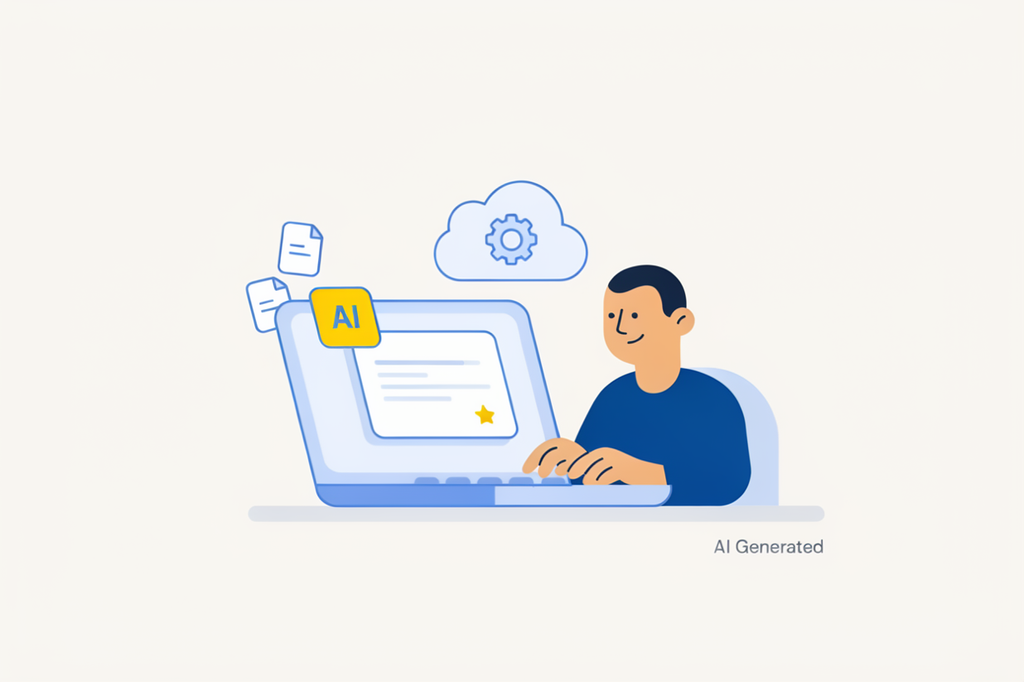
If AI helps create an image, audio, video or published text, the content may need to be labelled. The same applies when a custom text label or an interactive second layer is used to disclose AI involvement. In these cases, the label should make it clear to people that AI was involved.
AI-generated model
You create a completely synthetic person wearing your product.
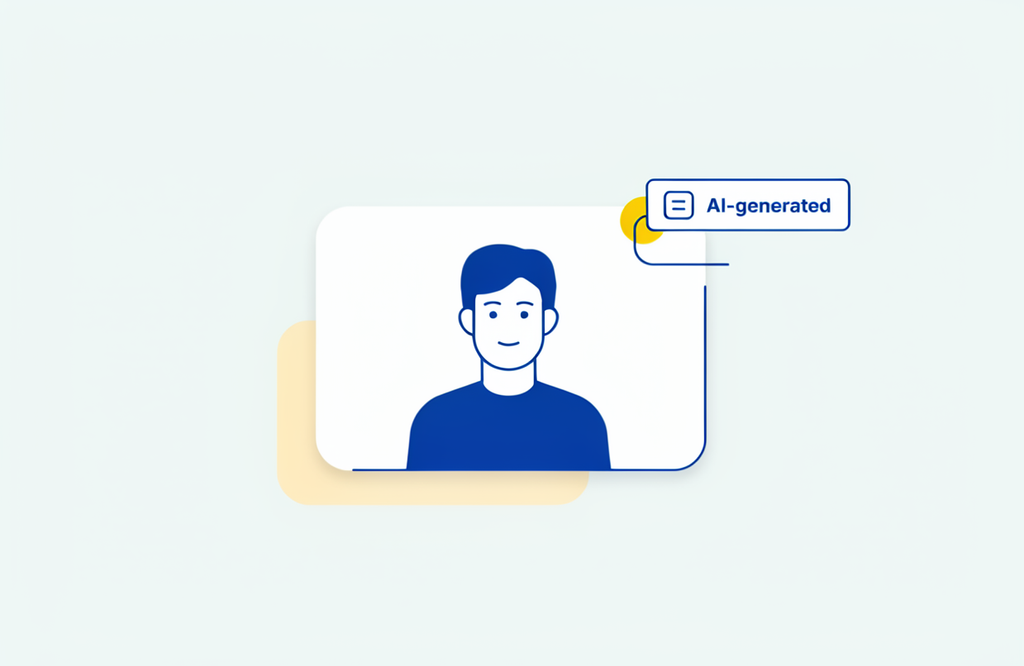
Again, you need to look at the specific circumstances and applicable transparency requirements rather than assuming that every AI-generated image has exactly the same obligation.
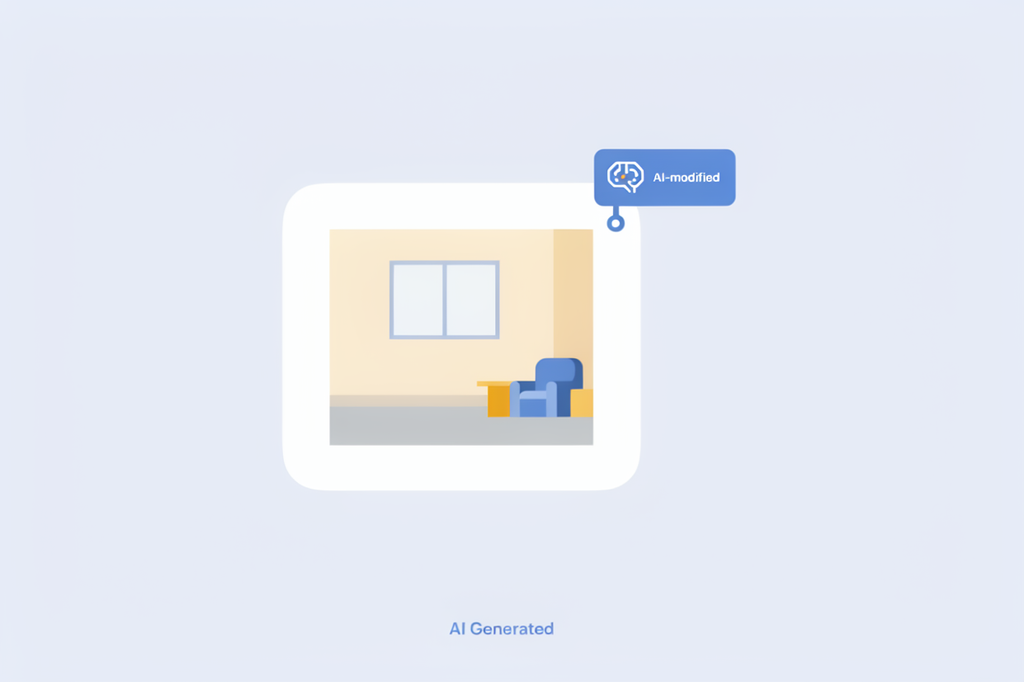
When AI modifies existing, human-created content about matters of public interest, labelling may also be required. For example, AI might replace a person’s face in a real photograph with that of a celebrity or model, or add furniture to an authentic photo of an empty apartment. In these cases, the result has been altered by AI, even though the original image was real.
AI chatbot
Here the situation is much clearer. If a customer is directly interacting with an AI system, they generally need to be informed that they are interacting with AI.
AI-generated public-interest content
The Act also contains specific rules for AI-generated or manipulated text published to inform the public on matters of public interest. So the context matters. A product description and a news article are not treated in exactly the same way.
Limitations and exceptions
There are also exceptions. For example, the transparency requirements include specific provisions for artistic, creative, satirical and fictional works.
There are also situations where AI-generated text has been subject to human review or editorial control and a person assumes editorial responsibility.
Again, this is why the simple statement:
“Everything made with AI must be labeled.” isn’t a very useful way of understanding the AI Act.
The real question is:
What AI system are you using, what content is it creating, and how is that content being used?
EU Icons: How to display AI-generated content
If you do need to disclose AI-generated content, another question appears:
How should you actually show it? The European Commission has published guidance and icons for communicating AI-generated content.
5. Enforcement, fines
 | The idea is to make the information clear without creating a completely new visual language for every website. For ecommerce, this could become part of the UX. For example: AI-generated image |
 | The important thing is that the information should be clear and accessible.And this is where I think ecommerce designers will have an interesting role to play. |
 | Because AI transparency shouldn’t become another annoying pop-up that customers immediately close. It should be designed as part of the experience. |
And finally, the question everyone asks when they hear about a new regulation: What happens if you don’t comply?
The AI Act provides for significant fines. Depending on the type of infringement, the maximum administrative penalties can reach millions of euros or a percentage of a company’s worldwide annual turnover.
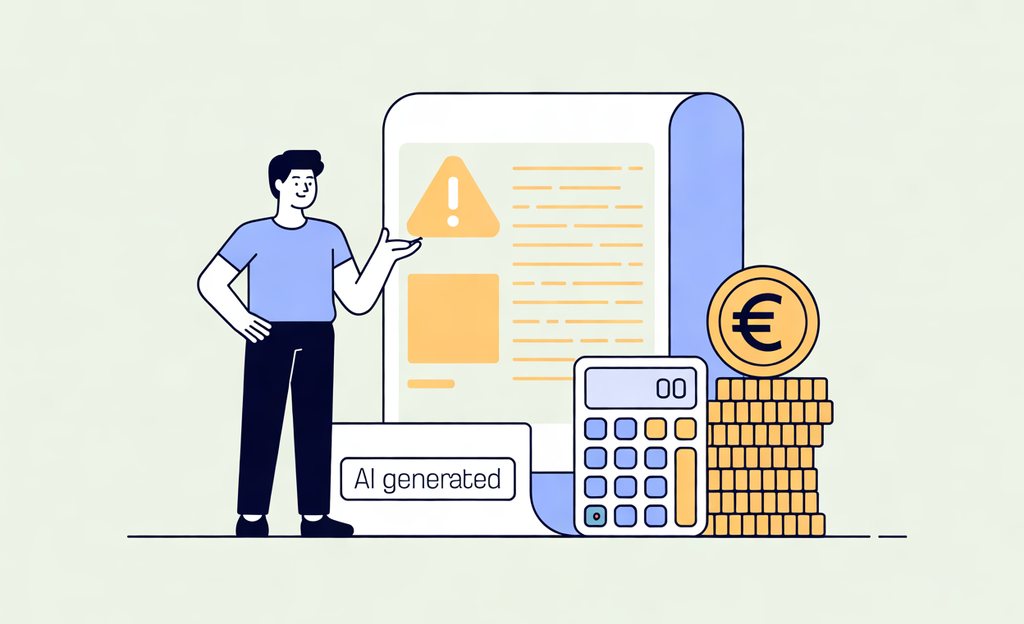
For certain violations, the maximum can be €35 million or 7% of worldwide annual turnover, whichever is higher.
For other violations, including certain transparency obligations, the maximum can reach €15 million or 3% of worldwide annual turnover, whichever is higher.
But these are maximum penalties. It doesn’t mean that an ecommerce store will receive a €15 million fine because someone forgot to add an AI disclosure.
Authorities take a number of factors into account, including the nature and severity of the infringement, the size of the company, whether the violation was intentional or negligent, cooperation with authorities and steps taken to reduce the impact.
So the point isn’t to panic about the fines. The point is to understand what you’re actually using.
Final thoughts
AI is moving very quickly. Probably much faster than most businesses can keep up with. And that’s why I don’t think the best approach is to simply look at the AI Act as another regulation you need to “tick off.” Start with something much simpler. Audit the AI tools you already use. Find out what they do. Check what data they process. Understand whether customers interact with them or see their output. Then check which AI Act obligations may apply.
Because the question for ecommerce businesses is no longer:
“Should we use AI?” We’re already past that point.
The better question is:
“Are we using AI in a way that is transparent, responsible and clear to our customers?” And that is probably a question worth asking before adding the next AI tool to your store.






Leave a Reply